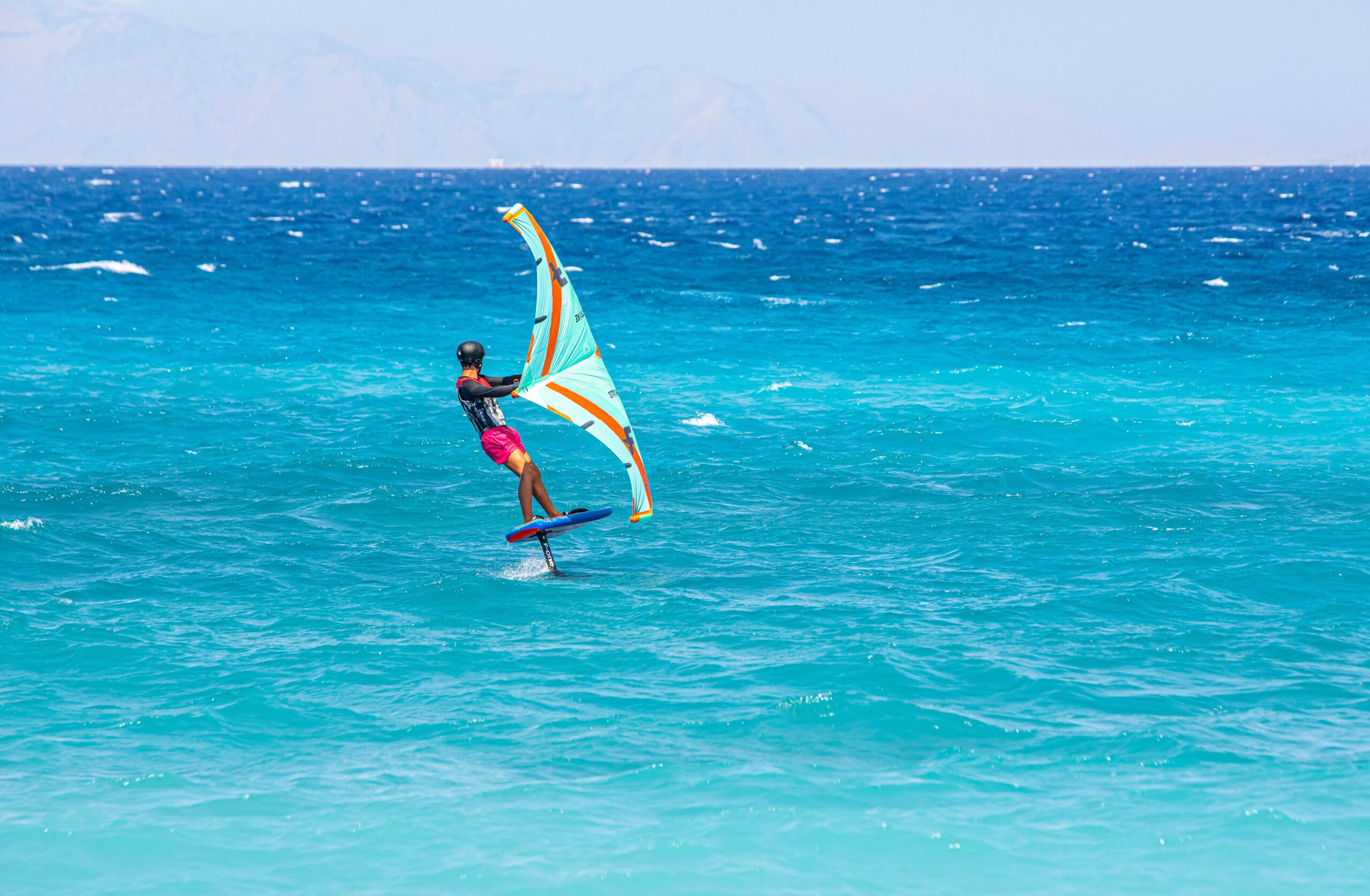
Showing up unprepared can take the fun out of an otherwise great day on the water. This practical checklist covers everything from sun protection and proper footwear to what NOT to bring (loose jewelry, valuables, cotton clothing). We also explain what’s typically provided by rental companies versus what guests should bring themselves, helping first-timers arrive fully prepared.
Getting Your Stance Right
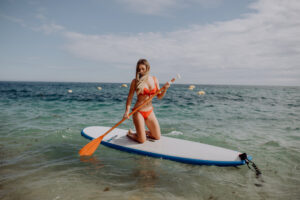
Before you even think about standing up, it helps to get familiar with the board on calm, shallow water. Start in a kneeling position with your hands gripping the rails for stability. Your instructor will guide you through finding the board’s centre point — usually marked by the carry handle — since this is where your balance will feel most stable once you stand.
Most beginners are surprised by how quickly their body adapts — balance is more about relaxed knees than rigid focus.
When you’re ready to stand, place your feet shoulder-width apart where your knees were, keep them slightly bent, and rise in one smooth motion while looking straight ahead — not down at your feet. Looking down is the most common reason beginners lose balance.
What to Expect From Your First Session
A typical beginner session runs 60–90 minutes and starts with a short briefing on land covering paddle technique, basic steering, and what to do if you fall (don’t worry — everyone does at least once). Here’s what’s usually included:
- Safety briefing and proper paddle technique
- Life jacket and board leash fitting
- Guided practice in calm, shallow water
- Free paddling time once you’re comfortable
Common Beginner Mistakes to Avoid
The most frequent mistake is gripping the paddle too tightly, which tires your arms quickly and reduces control. Keep a relaxed grip and let your core do most of the work. Another common issue is standing too far back on the board, which makes the nose lift and balance harder — your instructor will help you find the right foot placement before you start paddling independently.